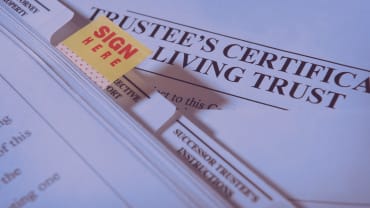
Over the course of the New Year, you may receive identity verification requests from us, even though you’re an existing client. Why do we need to request your ID again? Sarah Bell, our Trust Compliance Officer and Alison Marron, our Financial & Economic Crime Reporting Director, explain the reasons from a compliance and anti-money laundering perspective.
What do we mean by identify verification and why is it so important?
Verifying identity means obtaining independent and reliable proof that a client is who they say they are. We do this by obtaining photo ID and home address details and checking these against trustworthy sources to confirm the legitimacy of the information provided. This helps us to establish the instructions we receive are coming from you and not from a fraudulent person.
But why do we ask our clients to re-verify their ID and personal details?
Clients’ details can change on a regular basis. People move house, even country and can have a change of name. Verifying that clients live at a genuine address adds an extra layer of security to our ‘Know Your Client’ checks, making it harder for criminals to use stolen and fake identities. If you live in a country which is classed as higher risk, the law requires us to carry out additional checks and screening, so we need to keep up to date with our clients movements.
Checking your contact details haven’t changed means we can be certain correspondence and documents, such as Wills and Powers of Attorney, are sent to the correct contact details. It also means we can be sure information held with HMRC is kept up to date, as failure to do so can result in significant penalties.
What are the regulations behind all these requests?
A few examples of the regulations are described below. The rules can evolve over time, meaning we need to regularly check the ID documents we hold are indate and at times request further documentation to comply with new regulations.
1. HMRC’s Trust Registration Service (TRS):
Most trusts must register with HMRC to record details of persons connected to a trust, including the settlors, trustees and beneficiaries. The information must be kept up to date, which is why we may ask you to confirm your details haven’t changed from time to time, to avoid penalties from HMRC for non-compliance.
2. Automatic Exchange of Information (AEOI):
AEOI agreements enable the automatic exchange of information between the UK and worldwide tax authorities. Trustees of certain trusts must hold self-certification forms for all persons connected to the trust, to confirm a person’s place of tax residence (and other personal details), to comply with the due diligence and reporting rules. You may receive an email request from us to obtain these forms, if you are a Trustee affected by these rules.
3. Anti-Money Laundering Regulations:
Under the client due diligence regulations, we must obtain and retain on file in date, verified ID for our clients. This means we need to carry out ID checks when onboarding a new client and review the information held throughout a client relationship. For example, we’d need to obtain verification of your new photo ID when the ID we have on file (such as a passport/driving licence) expires. We also need to carry out checks when there is a change of circumstances, such as verifying a change of address. We also need to check the source of wealth if you are making gifts into a trust or buying a property for example.
What kind of identity and compliance requests can clients expect to receive?
We use an online electronic provider called ‘Amiqus’ to obtain and verify your photo and address ID. If required, you will receive an Amiqus Request via email to carry out the ID check. This Request can be easily accessed and completed via a smartphone. The process only takes a few minutes to complete. The Amiqus process allows you to securely complete electronic identity and verification checks, replacing the need for you to provide certified copies of your ID or arranging face to face meetings or video calls to verify your ID. If ‘Amiqus’ isn’t suitable, we can make alternative arrangements with you to obtain and verify your ID.
You may also be asked to complete an electronic self-certification form to confirm your personal details to comply with TRS & AEOI rules. You will receive a link via email from Brodies if we require this.
We appreciate the ID requests can be repetitive and time-consuming. If ever you are unsure of why we are asking for updated ID, please get in touch with one of our trust lawyers.
Contributors

Trust Compliance Officer

Partner

Financial & Economic Crime Reporting Director